
The presentation of the St Lucia Budget 2026/27 by Prime Minister Hon. Philip J. Pierre marks a pivotal moment in the island’s history. Titled “Laying a Strong Foundation for Sustainable Economic Growth and National Development,” this fiscal package isn’t just about numbers; it is a strategic manifesto aimed at shielding the “Fair Helen” from global shocks while empowering its most valuable asset—its people.
With a total expenditure projected at XCD 2.189 billion, the 2026/2027 appropriation bill represents a 6.4% increase over the previous year. But what does this mean for the average citizen, the budding entrepreneur, and the international investor? In this deep dive, we break down the core pillars of the budget, from the Youth Economy Agency to the ambitious Blue Economy initiatives.
1. The Macroeconomic Landscape: Growth Amidst Global Volatility
Before diving into the specific allocations, it is essential to understand the environment in which this budget was drafted. Prime Minister Pierre noted that despite the “war in Iran” and rising global oil prices, St Lucia’s economy has remained remarkably vibrant.
- GDP and Deficit: The projected overall deficit stands at $212.4 million, roughly 2.8% of GDP—a figure that signals fiscal responsibility in a post-pandemic era.
- Revenue Growth: Recurrent revenue is expected to hit $1.75 billion, driven by a 13.3% increase in taxes on international trade.
- The Debt Strategy: In a move that surprised many analysts, the government opted not to draw down on certain secured loans, choosing instead to rely on the robust performance of local revenue and regional security markets.
Why This Matters for Sustainable Growth
Sustainable growth requires a “primary surplus,” and the 2026/27 budget delivers an estimated $90.1 million surplus. This cushion allows the government to invest in social safety nets without spiraling into unmanageable debt.
2. Empowering the Next Generation: The Youth Economy Agency
One of the loudest rounds of applause during the Philip J Pierre budget address came during the discussion of the Youth Economy Agency (YEA). Since its launch in 2022, the YEA has become a Caribbean model for how to turn “hobbies into hashtags and hashtags into harvests.”
In the 2026/27 budget, the Ministry of Economic Development and the Youth Economy has been allocated $84.5 million. This funding is earmarked for:
- Training & Grants: Direct financial support for young entrepreneurs in the “Orange Economy” (creative arts, tech, and digital media).
- OECS Skills and Innovation Project: A $8.2 million investment to ensure St Lucian youth are competitive on a global scale.
Expert Insight: For those looking to see the results of this innovation, visiting the local craft markets or tech hubs in Castries is a must. If you’re planning a trip to see the “New St Lucia,” consider booking ato meet the local artisans benefiting from these very grants.
3. Infrastructure and Health: The Completion of St Jude Hospital
A foundation for growth is literal as much as it is figurative. The 2026/27 budget signals the end of a long chapter in St Lucian history: the reconstruction of St Jude Hospital.
The government has allocated over $36.8 million for operational costs and an additional $3 million to finalize the commissioning of the new facility. This, combined with the $83.7 million for the Millennium Heights Medical Complex, ensures that healthcare is no longer a luxury but a standard right for every Saint Lucian.
Major Capital Projects 2026/27:
- Millennium Highway & West Coast Road: Final completion of these vital arteries to improve commerce and tourism flow.
- Choc Bridge & Sir Julian-Arhunt Highway: Commencement of work to ease traffic congestion in the north.
- Hewanorra International Airport: Continued redevelopment to accommodate the 2026/27 tourism surge.
4. The Blue Economy: Unleashing the Power of the Ocean
As a Small Island Developing State (SIDS), St Lucia’s greatest resource is the sea. The “Unleashing the Blue Economy” project receives a dedicated $17.1 million in this year’s budget.
This isn’t just about fishing; it’s about:
- Sustainable Ocean Financing: Creating a framework where the ocean pays for its own protection.
- Climate Resilience: Using the $7.9 million climate adaptation fund to protect coastal communities from rising sea levels.
- Fish Adapt Project: A $2.3 million initiative to modernize the fisheries sector, ensuring food security.
For travelers, the Blue Economy means cleaner beaches and better-managed marine parks. If you want to experience the “Blue Side” of the island, that highlight the very marine protected areas this budget seeks to preserve.
5. Tax Relief and Revenue: The 2026 Tax Amnesty
To support the “most vulnerable,” the government has extended the Tax Amnesty program to May 1st, 2026. This program offers a 100% waiver on interest, penalties, and collection fees for all tax types, including VAT and Income Tax, for periods up to 2023.
Furthermore, the budget includes a 2% salary increase for public servants, part of a wider collective agreement to ensure that the “National Development” includes the workers who keep the country running.
6. Tourism: The Engine of Growth
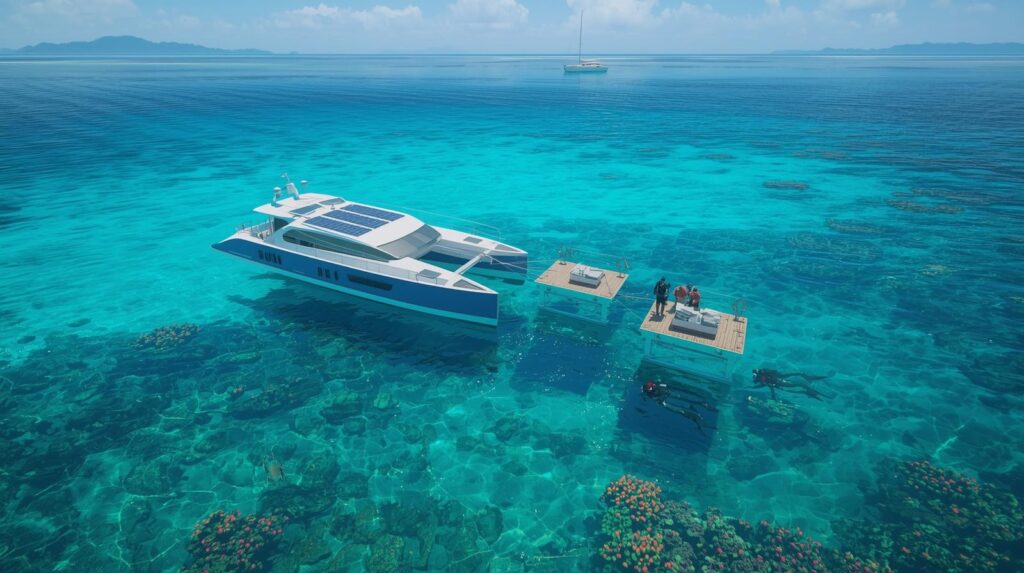
While the budget diversifies into tech and the blue economy, tourism remains the primary engine. The Citizenship by Investment (CBI) program continues to be a top non-tax revenue source, with a 20.2% projected increase in non-tax revenue for the 2026/27 cycle.
The government is optimistic, citing massive proposed investments in the tourism sector. This is the perfect time for visitors to explore the island beyond the Pitons. From the lush rainforests to the sulfur springs, St Lucia is reinventing itself as a “Sustainable Destination.”
7. Conclusion: A Foundation for 2040
The St Lucia Budget 2026/27 is more than a fiscal document; it is the first major step toward the National Development Plan 2026–2040. By focusing on fiscal discipline, youth empowerment, and infrastructure, the Pierre administration is attempting to build an economy that is “shock-proof.”
As the island transitions toward a greener, bluer, and more digital future, the opportunities for both locals and visitors are expanding. Whether you are a citizen looking for a grant or a traveler looking for an authentic Caribbean experience, St Lucia is officially open for the future.
The Tourism Synergy: St Lucia, Antigua, and Beyond
As St Lucia upgrades its ports and airports, it strengthens the entire OECS travel circuit. Many travelers visiting the region often look for multi-island experiences. For instance, those analyzing the economic growth of St Lucia often find themselves transitioning to neighboring islands like Antigua to compare development and leisure offerings.
If you are a traveler or an investor exploring the region’s growth, you’ll find that the connectivity between islands is at an all-time high. While St Lucia focuses on “Blue Economy” growth, neighboring hubs offer complementary experiences. For those planning a regional getaway, exploring Things to do in Antigua is a natural next step.
From the historic sites of Nelson’s Dockyard to the vibrant markets, there are endless Things to do in St John’s. These St John’s Tours showcase the same high-standard “Sustainable Tourism” models that the St Lucia 2026/27 budget aims to replicate.