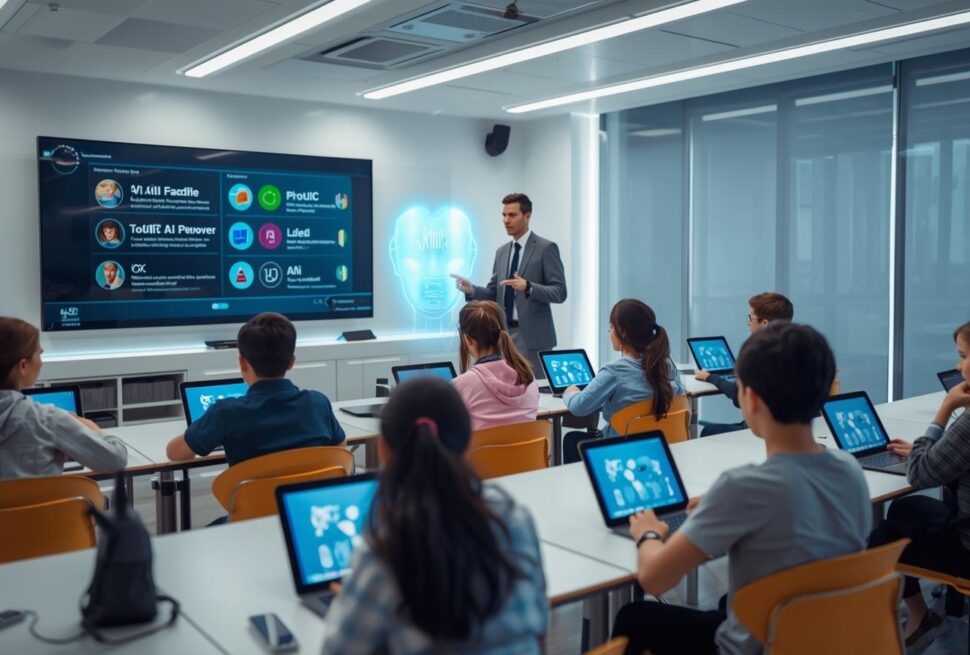
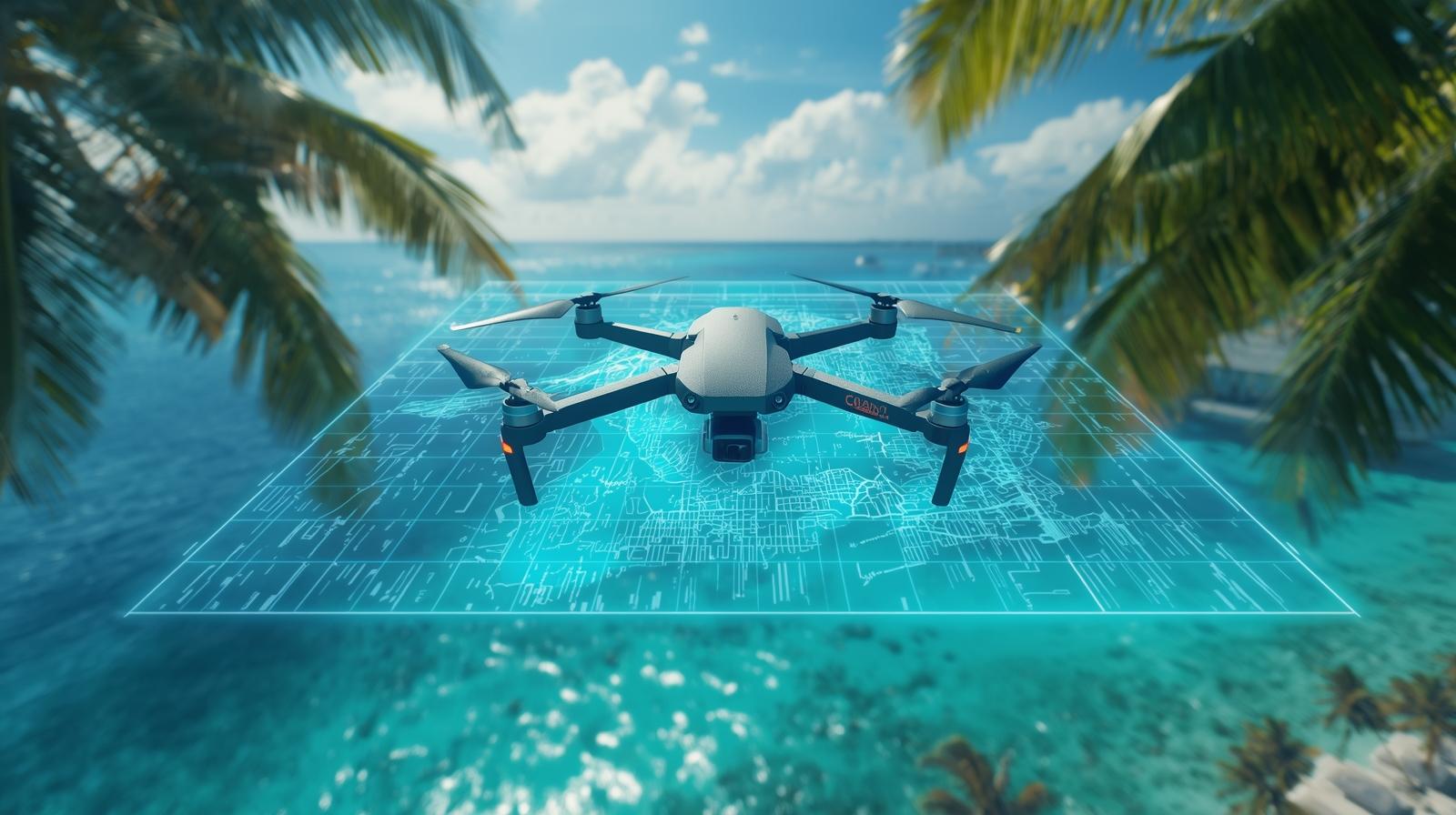
The Caribbean archipelago, while stunningly beautiful, is a region defined by its vulnerability to the elements. From the Soufrière Hills in Montserrat to the hurricane-prone coasts of the Bahamas, the need for rapid data has never been a luxury—it is a survival requirement. This is where the UNESCO Caribbean Disaster Technology framework changes the game.
By integrating Drones, Artificial Intelligence (AI), and Geographic Information Systems (GIS), UNESCO is not just teaching people how to fly gadgets; they are building a digital fortress for the islands. This training initiative, spearheaded by the UNESCO Kingston Office, ensures that when the next storm hits, the reporting is faster, the maps are more accurate, and the response is life-saving.
1. The Core Mission of UNESCO Caribbean Disaster Technology
The primary goal of the Media Development Program (MDP) is to ensure that information flows even when the power goes out. In a disaster, “information is aid.” If a community doesn’t know where the clean water is or which roads are washed away, the disaster continues long after the wind stops.
The UNESCO Caribbean Disaster Technology program targets journalists, first responders, and technical officers. By providing them with high-end UAVs (Uncrewed Aerial Vehicles) and the software to run them, UNESCO is closing the “digital gap” that often leaves Small Island Developing States (SIDS) behind during global technological leaps.
Empowering Local Storytellers
In the past, major disaster footage came from international news crews who flew in days later. Now, local journalists are being trained to deploy drones within minutes of a “clear” signal. This localized approach ensures that the narrative is controlled by those who live on the islands, providing a more nuanced and urgent perspective on the ground reality.
2. Drones: Transforming Aerial Reporting
Drones are the most dynamic part of the UNESCO Caribbean Disaster Technology toolkit. Unlike satellites, which can be blocked by cloud cover during a storm, drones fly under the clouds.
Rapid Damage Assessment (RDA)
Using photogrammetry, drone pilots can take hundreds of photos and stitch them into a high-definition 3D map. This allows governments to see exactly which roofs are gone and which power lines are down. For the travel industry, this is vital. It allows hotel owners and tour operators to assess damage quickly and start repairs, shortening the recovery window.
The “Eyes” of the Search and Rescue
Modern drones used in this UNESCO training are often equipped with thermal sensors. In the aftermath of a landslide or flood, these drones can detect heat signatures of survivors trapped under debris or thick forest canopy. This is a massive upgrade from traditional “line-of-sight” searching, which is slow and dangerous for rescue teams.
3. AI: The Brain Behind the Data
Artificial Intelligence is often misunderstood as just “chatbots,” but in the context of UNESCO Caribbean Disaster Technology, AI is a filtering powerhouse.
Combatting Information Overload
During a hurricane, thousands of social media posts are uploaded every minute. Most are duplicates or unverified. AI algorithms are now being used to scan these posts, geolocate them, and flag the ones that show actual infrastructure damage. This allows newsrooms to verify facts in real-time, preventing the spread of “fake news” that can lead to panic.
Predictive Modeling for Future Safety
AI doesn’t just look at what is happening; it looks at what will happen. By feeding decades of Caribbean weather data into AI models, UNESCO-trained technicians can predict which storm surges will hit which coastal villages with uncanny precision. This allows for “preventative reporting”—telling people to leave before the water arrives.
4. GIS: The Digital Blueprint of the Islands
If drones provide the vision and AI provides the logic, GIS (Geographic Information Systems) provides the foundation. GIS is the “map” that makes all other data useful.
Visualizing Vulnerability
A GIS map is like a digital sandwich.
- Bottom Layer: The physical terrain (mountains, coastlines).
- Middle Layer: Infrastructure (hospitals, schools, power plants).
- Top Layer: Real-time disaster data (flood levels, wind speeds).
When a journalist or a disaster manager looks at a UNESCO Caribbean Disaster Technology GIS dashboard, they aren’t just looking at a map; they are looking at a living document that tells them exactly where the highest risk is at any given second.
5. Boosting Tourism Resilience and Traveler Confidence
The Caribbean economy is built on the sun, sea, and sand. However, tourism is highly sensitive to the perception of safety. When a major hurricane is reported, travelers often cancel trips to the entire region, even to islands that were completely untouched.
Precision Reporting for the Travel Industry
With the precision of GIS and drone mapping, the Caribbean can now report with surgical accuracy. Instead of saying “The Caribbean is hit by a storm,” media outlets can show a map proving that while one island is recovering, five others are perfectly sunny and open for business.
For those planning to visit, knowing the region uses such advanced technology adds a layer of safety. You can confidently book your next adventure and find the best island excursions on iCCaribbean, supporting the very communities that are working hard to stay resilient and tech-forward.
6. Technical Partnerships: GeoTechVision and Jamaica Flying Labs
UNESCO doesn’t work alone. This initiative is a massive collaborative effort. Partners like GeoTechVision provide the GIS expertise, while Jamaica Flying Labs brings the practical drone experience.
A Regional Network of Experts
The beauty of this training is that it creates a cross-border network. A drone pilot trained in St. Lucia can communicate with a GIS expert in Barbados via a unified cloud platform. This “Digital Caribbean” approach ensures that no island is an island when it comes to disaster data.
7. Ethical Considerations in Disaster Tech
Using Drones and AI isn’t without its risks. UNESCO places a heavy emphasis on the ethical use of technology.
- Privacy Rights: Ensuring that drone footage of victims is used only for rescue and not for sensationalized news.
- Data Accuracy: Training AI to avoid biases that might overlook rural or less “digitally active” communities.
- Sustainability: Ensuring the tech is maintained locally, so the islands aren’t dependent on foreign experts to fix their equipment.
12 UNESCO Caribbean Disaster Technology Facts for 2026

The evolution of disaster resilience in the Caribbean has reached a tipping point. In 2026, the UNESCO Caribbean Disaster Technology initiative has expanded far beyond simple drone flights. It now represents a sophisticated, multi-layered digital ecosystem designed to protect millions of residents and travelers. As climate volatility increases, these twelve breakthroughs define how the region is fighting back with data, ethics, and innovation.
1. The Integration of GeoAI in Caribbean Mapping
In 2026, the term “GIS” has evolved into “GeoAI.” This represents the fusion of Geographic Information Systems with advanced Machine Learning. Previously, mapping a flooded district in Kingston or Port of Spain took days of manual data entry. Today, the UNESCO Caribbean Disaster Technology framework uses GeoAI to automatically identify flood boundaries from satellite and drone imagery in minutes.
By teaching AI to recognize the difference between a permanent lake and a temporary flood zone, responders can prioritize aid to newly submerged areas. This technology is being refined by the Mona GeoInformatics Institute (MGI) in Jamaica, serving as a regional hub for geospatial intelligence.
2. Drone Task Manager: A Collaborative Sky
One of the biggest hurdles in disaster response was the “lone wolf” drone pilot. Multiple organizations would fly drones over the same area, creating data redundancy and air traffic risks. In 2026, UNESCO Caribbean Disaster Technology has standardized the “Drone Task Manager” platform.
This tool, supported by Jamaica Flying Labs, allows different teams—from the Red Cross to local newsrooms—to coordinate their flight paths. It ensures that every square meter of a disaster zone is mapped once, with the data shared instantly across a unified regional cloud.
3. Real-Time Crisis Verification via AI Audits
Misinformation in the Caribbean often follows a “viral surge” pattern during hurricanes. In 2026, UNESCO-trained journalists are utilizing AI audits to identify deepfakes and repurposed imagery. If an image of a hurricane from 2017 is shared as “live” in 2026, the UNESCO Caribbean Disaster Technology toolkit flags the metadata discrepancy immediately.
This breakthrough is essential for maintaining public trust. When the media can definitively say “this bridge is safe” based on AI-verified drone footage, it prevents unnecessary panic and allows for smoother evacuations.
4. The “RadioBox” Technology Integration
While high-tech drones are flashy, the Caribbean still relies on radio when the internet fails. A major breakthrough in 2026 is the integration of UNESCO Caribbean Disaster Technology with “RadioBox” hardware.
This allows data collected via GIS and drones to be converted into automated voice broadcasts. In remote areas of the Blue Mountains or the interior of Guyana, residents can receive high-tech data updates via traditional FM radio frequencies, ensuring that the “digital divide” doesn’t become a “death divide.”
5. Capacity Building: The 30-Hour Certification
UNESCO has formalized the path to becoming a tech-first responder. The 30-hour online and field course is now the regional gold standard. It covers:
- UAV Fundamentals: Safe flight protocols and legal regulations.
- Photogrammetry: Turning photos into 3D models.
- AI Ethics: Protecting the privacy of victims during data collection.
- GIS Analysis: Interpreting spatial data for actionable reporting.
Graduates of this program are added to a “UNESCO Media Roster,” a pre-vetted list of experts who can be deployed by governments during national emergencies.
6. Strengthening Small Island Developing States (SIDS)
Small islands like Antigua, Barbuda, and Dominica face unique challenges; a single storm can wipe out their entire GDP. The UNESCO Caribbean Disaster Technology initiative specifically tailors its GIS models to these micro-geographies.
The technology now includes “Sea Level Rise Projections” integrated directly into local zoning maps. This helps small island governments decide where to build new hospitals and schools, ensuring that today’s infrastructure survives tomorrow’s climate.
7. The Role of Tourism in Data Sovereignty
Tourism is the Caribbean’s largest industry, but it also generates massive amounts of data. In 2026, the UNESCO Caribbean Disaster Technology program encourages a “Data for Good” partnership with major resorts.
Resorts now share their local weather station and sensor data with the national GIS grid. This creates a hyper-local weather network that benefits everyone. For travelers, this level of preparedness is a major selling point. When you book your adventures through Viator, you are visiting a region that is globally recognized for its proactive safety measures.
8. Cultural Heritage Protection via 3D Modeling
A hidden breakthrough of the UNESCO Caribbean Disaster Technology initiative is the “Digital Twins” project. Before a hurricane season begins, teams use drones and LiDAR (Light Detection and Ranging) to create perfect 3D replicas of historical sites, such as the Brimstone Hill Fortress in St. Kitts.
If a site is damaged, these 3D “Digital Twins” provide the exact blueprints needed for a precise architectural restoration. This ensures that the Caribbean’s rich cultural history isn’t lost to a single catastrophic event.
9. Inclusive AI: Addressing Gender and Disability
Data is only useful if it represents everyone. In 2026, the UNESCO Caribbean Disaster Technology curriculum includes specific modules on “Inclusive GIS.”
This means mapping the location of residents with disabilities or identifying households led by single mothers, who may need different types of evacuation support. By using AI to audit these demographic layers, disaster managers can ensure that aid is distributed equitably, leaving no one behind.
10. The 2026 “Beyond the Storm” Conference
In May 2026, the “Drones, AI & GIS for Disaster Risk Management” conference in Montego Bay marked a turning point. It brought together 10 different Caribbean nations to sign a “Data Sharing Treaty.”
This treaty allows UNESCO Caribbean Disaster Technology assets to move freely across borders during a crisis. If Jamaica’s drone fleet is grounded, Barbados or Trinidad can legally fly their assets into Jamaican airspace to assist with mapping, creating a truly “One Caribbean” response.
11. Moving from Reaction to Prediction
The most significant shift in 2026 is the move toward “Predictive Reporting.” Instead of reporting that a flood has happened, journalists are using GIS and AI weather models to report that a flood is 90% likely in the next 6 hours.
This proactive approach, powered by the UNESCO Caribbean Disaster Technology stack, has already been credited with reducing casualty rates in the 2025 hurricane season. It turns the media from a chronicler of tragedy into a facilitator of safety.
12. Scalability: A Global Model
The success of the Caribbean model is now being exported. UNESCO is using the lessons learned from Jamaica Flying Labs and GeoTechVision to implement similar drone and GIS programs in the Pacific Islands and Southeast Asia.
The Caribbean is no longer just a “vulnerable region”; it is a global innovator in climate technology. The resilience shown here is a blueprint for the rest of the world as we face a future of environmental uncertainty.
External Authority Resource
For a comprehensive overview of how these technologies align with global safety standards, consult the UNDRR Sendai Framework for Disaster Risk Reduction, which provides the international guidelines that UNESCO’s Caribbean programs follow.
Final Thoughts on Caribbean Resilience
The UNESCO Caribbean Disaster Technology program is a testament to the region’s strength. By embracing the digital frontier, the Caribbean is no longer just “waiting for the storm.” They are watching it, mapping it, and outsmarting it.
For a deeper look into the official frameworks and global media development goals, you can explore the UNESCO World Press Freedom and Media Development resources, which outline how these technologies are being deployed worldwide.